by Ana P. Biazon Rocha
For a long time, pronunciation teaching was usually associated with models of ‘correct’ English, such as particular sounds, stress patterns and intonation contours, and the so-called ‘sounding like a native speaker’ ideal. However, through advancements in pronunciation research and in English as a Lingua Franca (ELF) (Jenkins, 2000), increasing attention has been given to intelligibility and communicative effectiveness, transforming the way in which successful communication is conceptualised. In other words, for many users, English is no longer simply a foreign language being learned in order to communicate with ‘native speakers’ (For further discussion on this, please check this previous blog post), but a working language used between people with different first languages, professional backgrounds and linguistic identities. Consequently, rather than asking ourselves, ‘What should this learner sound like?’, we teachers are invited to consider ‘What does this learner need their pronunciation to achieve?’ as the basis of our pronunciation teaching.
Following that, PronSIG’s annual online conference, Global Perspectives on Pronunciation for Specific Purposes, on 24 Oct 2026 (Sat), will explore the challenges of pronunciation teaching in international professional contexts. As a preparation for it, in this post, we will discuss what Pronunciation for Specific Purposes (PSP) means.
1. From pronunciation to purpose
Similar to English for Specific Purposes (ESP), which concentrates on learners’ particular needs, PSP focuses on the communicative situations in which learners actually need to use English. The context defines the pronunciation features to be practised and how interaction takes place (Tanner & Henrishsen, 2022). This is crucial: a pronunciation course for an international medical professional will not necessarily have the same priorities as one for a researcher giving conference presentations, a customer-service representative speaking on the telephone or an engineer working in a multilingual team.
Research on pronunciation teaching has increasingly recognised this contextual dimension, describing PSP courses as ones designed around work-related pronunciation needs and in different professional contexts such as healthcare, manufacturing, higher education and customer service (Pennington, 2021).
Thus, the starting point may not be a particular accent, but the professional situation, the communicative task and the listener. As Warchol highlights (2020), pronunciation instruction should be connected to broader communicative purposes and taught in meaningful contexts rather than treated as an isolated skill.
For us teachers, this may start with a few simple questions:
- Who is the learner speaking to?
- What do they need to do?
- In what situation will they use English?
- What kind of interaction will take place?
- Where might communication break down?
These questions can help us carry out the necessary needs analysis to identify the pronunciation needs that are most relevant to a particular learner, and/or group of learners, instead of resorting to a fixed list of sounds or pronunciation features to get things started.
In this sense, ‘specific’ in PSP does not necessarily mean teaching only specialist vocabulary or professional terminology, but considering the particular setting, task, interlocutor and communicative demands involved in using English.
2. From the classroom to the workplace
In PSP, pronunciation learning and practice differ from regular ESL or EFL classes (Tanner & Henrishsen, 2022). Consider the difference between practising pronunciation in a general English lesson and preparing someone for communication where being understood really matters. In Staples’ study (2019), for example, recordings of nurse-patient interactions were used to investigate prosodic features of professional healthcare communication and develop a pronunciation course for internationally educated nurses. The course resulted in more pragmatically appropriate pronunciation.
This shows the importance of real communication in PSP. Rather than asking only which pronunciation features are generally difficult for learners, we can also ask:
- What actually happens when English is used in a particular professional context?
- What does the speaker need to communicate?
- Who are they communicating with?
- Which parts of the interaction need to be particularly clear?
- What happens when communication is not successful?
Imagine, for instance, an engineer explaining a technical problem during an international team meeting. The pronunciation needs of this interaction may be different from those of a learner preparing for an academic presentation, a customer-service representative speaking on the telephone, or a nurse communicating with a patient. The pronunciation itself may involve familiar features such as stress, intonation, rhythm, speech rate or chunking, but the purpose for using those features can be different according to the situation.
This also raises an important question about the materials we use in PSP. If pronunciation is closely connected to professional communication, where should the examples that learners practise come from? Tanner and Henrishsen (2022, p. 224) mention ‘the use of audio-recorded roleplays or video-based interactions’ as sources to be explored. As a matter of fact, authentic conversations, meetings, presentations, consultations and workplace interactions may provide very different models from the dialogues traditionally found in general English materials. In this sense, the professional context is not simply the background to pronunciation teaching; it can help shape what is taught and how it is practised.
For further discussion on how to use authentic materials and integrate pronunciation into a particular context such as Business English, please check this previous blog post.
3. What makes pronunciation ‘specific’?
The idea of PSP also invites us to look more carefully at how pronunciation needs differ. A learner may need English for a particular profession, but the profession itself is only one part of the picture. The setting, the task, the listener and the consequences of misunderstanding can all influence what pronunciation teaching needs to address.
For example, speaking to a patient, presenting research to an international audience, giving instructions to a colleague, participating in a meeting or communicating with a customer are all professional uses of English, but they involve different types of interaction. Thus, the learner may need to make different aspects of their spoken communication clear and effective.
This means that PSP is not only about deciding which pronunciation features learners should practise, but also about understanding why those features matter in a particular communicative situation.
At the same time, this is where the question of intelligibility becomes more complicated. If English is being used between speakers from different linguistic backgrounds, there may be no single ‘ideal’ listener or single model of pronunciation. Research on ELF has also highlighted the relationship between pronunciation, intelligibility and identity, suggesting that speakers’ attitudes towards accent can involve not only practical concerns about being understood, but also how they wish to present themselves linguistically and professionally (Sung, 2016).
Perhaps, then, PSP asks us to move beyond the question of ‘What is the correct pronunciation?’ and towards a more context-sensitive one: ‘What pronunciation supports this speaker, in this situation, with this listener, to communicate successfully?’
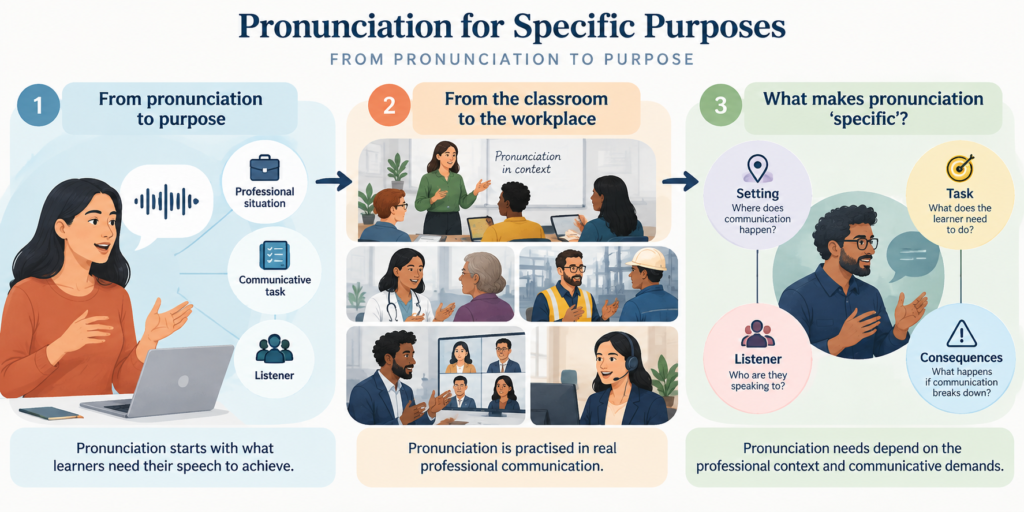
Image 1: Summary of Pronunciation for Specific Purposes
And that brings us to the wider questions surrounding Global Perspectives on Pronunciation for Specific Purposes:
- How do different professions define effective spoken communication?
- What happens when professional expectations meet ELF realities?
- How should teachers think about intelligibility, comprehensibility, accent and identity in high-pressure international contexts?
These are some of the questions that will be explored at PronSIG’s annual online conference on 24 October 2026. Unmissable, right? Make sure you register asap!
For more discussions, ideas and tips on how to teach pronunciation, our PronSIG blog is here for you! Don’t forget to leave your comments below and follow PronSIG on social media.
References
Jenkins, J. (2000). The phonology of English as an international language. Oxford University Press.
Pennington, M. C. (2021). Teaching Pronunciation: The State of the Art 2021. RELC Journal, 52(1), 3–21. https://doi.org/10.1177/00336882211002283
Staples, S. (2019). Using corpus-based discourse analysis for curriculum development: Creating and evaluating a pronunciation course for internationally educated nurses. English for Specific Purposes (New York, N.Y.), 53, 13–29. https://doi.org/10.1016/j.esp.2018.08.005
Sung, C. C. M. (2016). Does accent matter? Investigating the relationship between accent and identity in English as a lingua franca communication. System (Linköping), 60(60), 55–65. https://doi.org/10.1016/j.system.2016.06.002
Tanner, M. & Henrichsen, L. (2022). Pronunciation in Varied Teaching and Learning Contexts. In J. Levis, T. Derwing & S. Sonsaat-Hegelheimer, Second Language Pronunciation. Bridging the Gap Between Research and Teaching (215–234). Wiley Blackwell.
Warchoł, A. (2020). Teaching English Pronunciation to ESP Learners: Basic Views and Recommendations. Roczniki Humanistyczne, 68(10), 155–165. https://doi.org/10.18290/rh206810-12